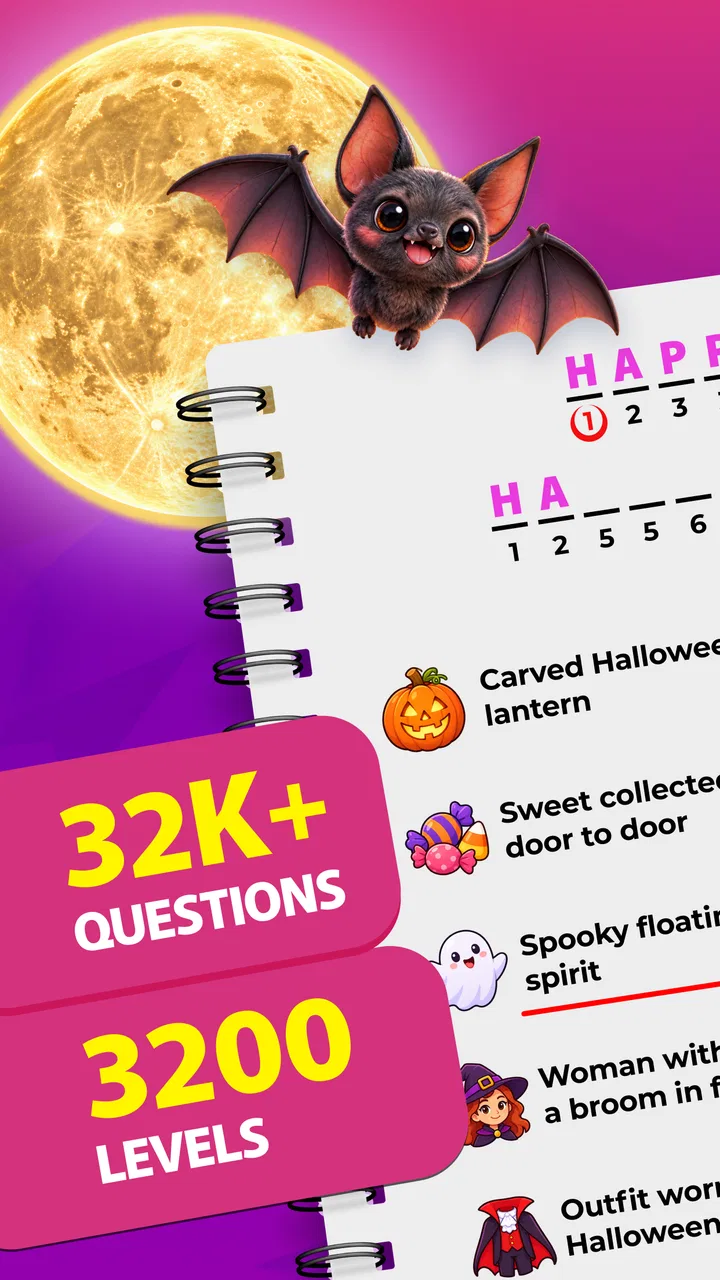
Crostic Crossword-Word Puzzles
- 4.7
- Rating
- 10.00M
- Installs
- Free
- Price
 Analysis by App-foxy
I spent time with Crostic Crossword-Word Puzzles as a daily word game, and my first impression was that it aims for a comfortable middle ground: more thoughtful than a quick guessing game, but less demanding than a traditional newspaper crossword. The basic appeal is easy to understand. You solve clues, build words, and work through a logic-based puzzle at your own pace. What makes it worth considering is not a dramatic feature list, but the way it fits into small gaps in the day.
This is a free word game from Severex, rated for Everyone. It has reached over 10 million installs and holds a 4.7 average from around 195 thousand ratings, which suggests that the format has found a broad audience. I can see why: the puzzles are approachable enough for a casual player, while the act of searching for the right word still gives each session a little mental weight.
How Crostic Crossword-Word Puzzles feels in everyday use
I find Crostic Crossword-Word Puzzles works best when I treat it as a small, self-contained pause rather than something to race through. This section looks at how its clue-and-letter rhythm fits into ordinary moments, and why a little deliberate backtracking can make the next puzzle more satisfying.
You May Also Like

 AccuWeather: Weather Radar
AccuWeather Review: A Quick, Clear Forecast for Everyday Decisions
For everyday plans, the best forecast is the one you can understand quickly. AccuWeather makes rain timing, radar, and local conditions easy to act on, with a few trade-offs.

 Hill Climb Racing
Why Hill Climb Racing Still Turns Crashes Into One More Run
A tiny car, a bumpy hill and one more upgrade: Hill Climb Racing keeps resurfacing because its simple chaos makes every near-miss feel personal.

 AliExpress - Shopping App
AliExpress Makes Global Shopping Feel Personal, but Shoppers Bear the Risk
AliExpress turns a global marketplace into a pocket-sized discovery engine. Its reach is useful, its shopping loop compelling, and its trade-offs easy to miss.

 Lords Mobile: Kingdom Wars
Lords Mobile Is a Kingdom-Building Routine, Not a Quick Match
A case-by-case verdict on the building, battles, device demands, and social commitments that make Lords Mobile rewarding for some players and exhausting for others.

 PDF Scanner app - TapScanner
TapScanner Makes Paperwork Easier to Capture, Check, and Share
TapScanner makes scanning with a phone feel less like a rescue operation and more like a dependable step in getting work done. Its capture tools are useful, though not flawless.

 Block Blast!
 Shows How Much a Puzzle Game Can Leave Out
A quiet grid game shows why puzzle players increasingly value instant clarity, repeatable skill and low-pressure play—and where the genre still needs to catch up.
More From Our News Desk
View All News


A quick start without a heavy learning curve
I did not need a long tutorial to understand what I was supposed to do. The combination of crossword solving and word guessing is familiar, so the game communicates its purpose quickly. That matters when I want something I can open during a short break rather than a game that expects a large time commitment before it becomes enjoyable.
The strongest use case is a quiet ten-minute window: waiting for an appointment, taking a break from work, or winding down before bed. I can begin a puzzle, make a few deductions, and stop without feeling that I have abandoned a complicated campaign. The format also works well for players who enjoy vocabulary games but do not necessarily want a competitive leaderboard or a fast timer dominating the experience.
Its store summary presents it as a daily crossword and word-guessing experience, and that description matches the central activity without needing extra explanation. I would recommend it to someone who likes the satisfaction of filling in an answer gradually. It is especially suitable if you prefer reasoning from clues and letter patterns instead of tapping through an action game.
The useful difference between guessing and solving
One detail I appreciated is that the game encourages two kinds of thinking. Sometimes I can recognize an answer from the clue immediately; at other times, I have to use the letters already available to narrow the possibilities. That shift keeps the session from feeling like a simple vocabulary quiz. A familiar word can still require attention when the surrounding answers change how I interpret the clue.
My practical tip is to avoid committing too quickly to the first answer that seems plausible. In a crossword-style puzzle, one uncertain word can make several later choices look wrong. I found it more effective to treat a doubtful answer as a working theory, then revisit it after solving an easier neighboring clue. This approach reduces the frustration of forcing a word that technically fits but does not make sense with the rest of the puzzle.
That workflow is one of the game’s quiet strengths. It gives the player a reason to move around the puzzle instead of staring at one difficult clue indefinitely. For people who enjoy wordplay, that small loop of testing, revising, and confirming is more rewarding than receiving an answer immediately.
What happens when a puzzle becomes difficult
The experience is not equally relaxing for everyone. If you dislike being stuck on a clue, the crossword structure may feel more irritating than entertaining. The game’s appeal depends on accepting a little uncertainty. I usually enjoy that tension, but I would not choose it when I want a completely mindless distraction.
A useful habit is to change the type of thinking rather than simply trying more guesses. I might scan for short, familiar words, look for a clue with a more precise meaning, or use the existing letters to identify a word pattern. This makes a difficult board feel manageable without turning every answer into random trial and error. It also helps preserve the satisfaction of solving the puzzle yourself.
Players who want a strict, publication-style crossword may find this experience more casual than they expect. Conversely, people who find traditional crosswords intimidating may appreciate the gentler entry point. That is the main trade-off: accessibility makes it easier to start, but serious crossword fans may want denser clues and a more formal puzzle structure.
Using it as a daily mental routine
The daily-puzzle idea gives the game a natural place in a routine. I can imagine opening it with morning coffee, using one puzzle as a short break between tasks, or returning to it in the evening when I want something quieter than social media. The best way to use it is to set a small personal limit, such as one puzzle or one short session, rather than allowing every difficult clue to turn into an extended struggle.
That approach also makes the game feel less like a test. I do not need to finish everything in one sitting. If I am tired, I can stop after making progress and return with a clearer mind. Word puzzles often benefit from that pause because an answer that seemed invisible earlier may become obvious later.
Speed, stability, and the feel of repeated sessions
For a puzzle game built around reading clues and entering words, perceived speed is mostly about whether the interface stays out of the way. I found the format better suited to deliberate interaction than rapid tapping. There is no reason to rush through a clue, and the game feels most comfortable when I treat it as a thinking exercise rather than a reflex challenge.
Repeated use is also where the difference between a simple word game and a demanding mobile title becomes clear. Crostic Crossword does not ask me to manage a large world, coordinate real-time action, or keep track of complicated systems. That makes it a sensible choice for short sessions and older phones that meet the Android requirement. The current version is 6.9.0, and the minimum Android version is 8.0, so compatibility covers a wide range of still-used devices.
I would still keep expectations realistic. A compatible phone does not automatically make every app feel identical on every device. Screen size, available storage, background activity, and the general condition of the phone can affect how comfortable any game feels. On a smaller display, reading clues and checking letters may require more concentration than on a larger one. That is not a deal-breaker, but it is worth considering if you prefer generous text and spacious controls.
When longer play can feel heavier
The game is easiest to enjoy in short bursts. During a longer session, the mental demand becomes more noticeable because I am repeatedly switching between clue interpretation, spelling, and checking the puzzle’s structure. That is not a technical weakness; it is simply the cost of the format. A word game can feel tiring even when the phone itself is handling it comfortably.
For heavy use, I recommend taking natural pauses instead of treating the puzzle as something to grind through. If I am repeatedly making careless guesses, the better solution is usually to step away for a few minutes. This is a non-obvious advantage of a slower puzzle format: stopping does not ruin the experience. The game remains useful because it can be resumed as a small mental exercise rather than a continuous performance.
Players who want a game to occupy a long commute may need to decide whether solving words for that entire period sounds appealing. I would choose this over an action title when I want calm concentration, but I would choose a larger puzzle collection or a narrative game if I wanted hours of variety. The experience is focused, and that focus is both its charm and its limit.
Reliability and recovering from an interrupted session
Reliability matters more in a daily puzzle than it might seem. If I open a game for a quick break and lose my place, the whole purpose of the session is undermined. My preferred way to use Crostic Crossword is to make deliberate progress, finish a clear section when possible, and avoid closing the app in the middle of a confusing guess. That is a practical recovery habit even when the interruption is caused by a phone call, a low battery, or simply changing tasks.
I would also avoid assuming that a puzzle should be rushed just because it is presented as a daily activity. If I am interrupted, I can remember the clue I was considering and return to it later. The game’s word-based nature makes recovery easier than in a real-time game because there is no action sequence to replay or timed event to catch up with.
That said, players who require perfect continuity across every session may prefer a more traditional offline puzzle book or a dedicated crossword application with a workflow designed specifically around saving and archiving puzzles. Crostic Crossword is better for casual continuity: open it, solve for a while, and come back when convenient.
Resource demands and device comfort
As a word game, it is a lighter choice in spirit than a graphics-heavy mobile game. The main resources I notice as a player are attention and screen space rather than fast reflexes or sustained visual processing. That makes it a good match for modest hardware, provided the device runs Android 8.0 or later and the display is comfortable for reading.
There is also a battery-related trade-off in how I use it. A short puzzle session is naturally less demanding than a long gaming session, but keeping any app open for extended periods can still be unnecessary when I am only solving one clue at a time. I prefer to play in brief intervals, which keeps the experience focused and avoids turning a simple word exercise into background phone use.
The game is free to start, with in-app purchases ranging from $0.99 to $12.99 per item. That makes it approachable for someone who wants to try the format before spending anything. My advice is to begin with the free experience and decide later whether any optional purchase is genuinely useful to your routine. A word puzzle should not feel like a financial commitment before you know whether its clue style suits you.
Who will enjoy it most
I think this is a strong fit for casual vocabulary fans, people returning to crossword games after a long break, and anyone who wants a quiet alternative to endless scrolling. It also works for players who like solving alone and do not need a competitive layer to stay interested. The Everyone rating makes it suitable for a broad audience, although individual enjoyment will still depend on reading ability, vocabulary, and patience with unfamiliar clues.
It is less suitable for players who want fast action, multiplayer competition, elaborate progression, or a highly specialized crossword challenge. If your ideal word game is a rapid anagram race, this may feel too measured. If you prefer cryptic crosswords with extremely indirect clueing, it may feel too accessible. Choosing it makes sense when you value a clear, relaxed puzzle loop more than intensity or complexity.
How it compares with familiar alternatives
Compared with a paper crossword, the main advantage is convenience. I can carry the puzzle on a phone and use it whenever I have a spare moment. Paper still wins for people who enjoy writing answers by hand, keeping completed puzzles, or avoiding screen time. Compared with a general word-guessing game, this title gives more context because answers interact with a broader puzzle rather than standing alone.
Compared with a newspaper-style crossword app, the experience feels like an easier starting point for everyday play. A dedicated crossword app may be better for advanced solvers who want a deeper range of difficulty or a more formal archive. Crostic Crossword is better when I want the basic pleasure of finding words without turning the activity into a serious study session.
Compared with an anagram game, it rewards patience more than speed. I can work from clues and existing letters instead of trying to rearrange tiles as quickly as possible. That makes it a better choice for relaxed concentration, but a weaker choice if the fun for you comes from time pressure and rapid rounds.
Small strategies that improve the experience
My first recommendation is to solve from certainty outward. Fill the answers whose clues have a clear meaning, then use those letters to revisit the harder entries. This is more efficient than attacking the most frustrating clue first, and it gives the puzzle a sense of movement even when one section remains unresolved.
Second, pay attention to the difference between a word that fits the letters and a word that fits the clue. When I find myself defending an answer with several explanations, I treat that as a warning sign. Leaving it open and solving another entry often reveals whether the original guess was sensible.
Third, use the game as a vocabulary notebook in your head. When an unfamiliar word appears, I try to connect it to the clue rather than simply moving on. That turns a completed puzzle into a small learning moment. It is a more useful habit than chasing completion alone, especially if you are playing to improve word recognition.
Finally, choose the right moment. I enjoy this game most when I have enough attention to think but not enough time for a large activity. If I am distracted, tired, or looking for instant stimulation, the clues can feel unnecessarily slow. Matching the game to your mood is the difference between a relaxing session and a frustrating one.
My performance verdict
After using it as a regular word-game option, I see Crostic Crossword as a dependable casual puzzle rather than a demanding technical showcase. Its strengths are its accessible format, modest session size, and ability to make a few spare minutes feel purposeful. The combination of crossword reasoning and word guessing gives it more texture than a bare answer quiz.
The limitations are equally clear. It may not satisfy expert crossword solvers, players seeking action, or anyone who dislikes getting stuck. Longer sessions can become mentally repetitive, and the small-screen reading experience will not suit every phone. The free entry point is welcome, but I would still approach in-app purchases carefully and only spend if the game has already become part of your routine.
Severex has made a game that is easy to recommend to the right person: someone who wants a calm, portable word challenge that can be picked up and put down without ceremony. I would not call it the best option for every puzzle fan, but I would suggest trying it if you enjoy clues, spelling, and the quiet satisfaction of correcting a wrong assumption. The best reason to install it is not speed or spectacle, but the simple pleasure of making one more answer click into place.
FAQs for Crostic Crossword-Word Puzzles
01What is Crostic Crossword-Word Puzzles?
Crostic Crossword-Word Puzzles is a mobile app that combines the fun of crossword puzzles with the challenge of word games. Players solve crosswords by finding the hidden words within the grid. The app is designed for both casual players and word puzzle enthusiasts, offering various difficulty levels and themes.
02Is Crostic Crossword-Word Puzzles free to play?
The app offers a free version with basic features and puzzles. However, there may be in-app purchases available, such as premium puzzle packs or ad-free experiences. These purchases enhance the gameplay but are not necessary to enjoy the app’s core features.
03Are there any system requirements for installing Crostic Crossword-Word Puzzles?
Crostic Crossword-Word Puzzles is available for both Android and iOS devices. It requires Android version 5.0 or later, and iOS 10.0 or later. Ensure your device meets these requirements for optimal performance, and keep your app updated for the best experience.
04Does Crostic Crossword-Word Puzzles offer offline play?
Yes, Crostic Crossword-Word Puzzles can be played offline. This makes it convenient for users who want to enjoy the game without an internet connection, perfect for traveling or commuting. However, certain features like leaderboard updates and in-app purchases may require an internet connection.
05How can I get help if I'm stuck on a puzzle in Crostic Crossword-Word Puzzles?
If you find yourself stuck, the app provides hints and tips to assist you. These can be accessed by spending in-game currency or watching ads. Additionally, the community and online forums can be a great resource for strategies and tips shared by other players.
Pros
- Engaging puzzles enhance vocabulary.
- User-friendly interface for easy navigation.
- Regular updates with new challenges.
- Offline mode available for convenience.
- Hints help when you're stuck.
Cons
- Ads can be frequent and distracting.
- In-app purchases may be costly.
- Occasional app crashes reported.
- Limited themes customization options.
- Some puzzles can be repetitive.

Crostic Crossword-Word Puzzles
Gallery